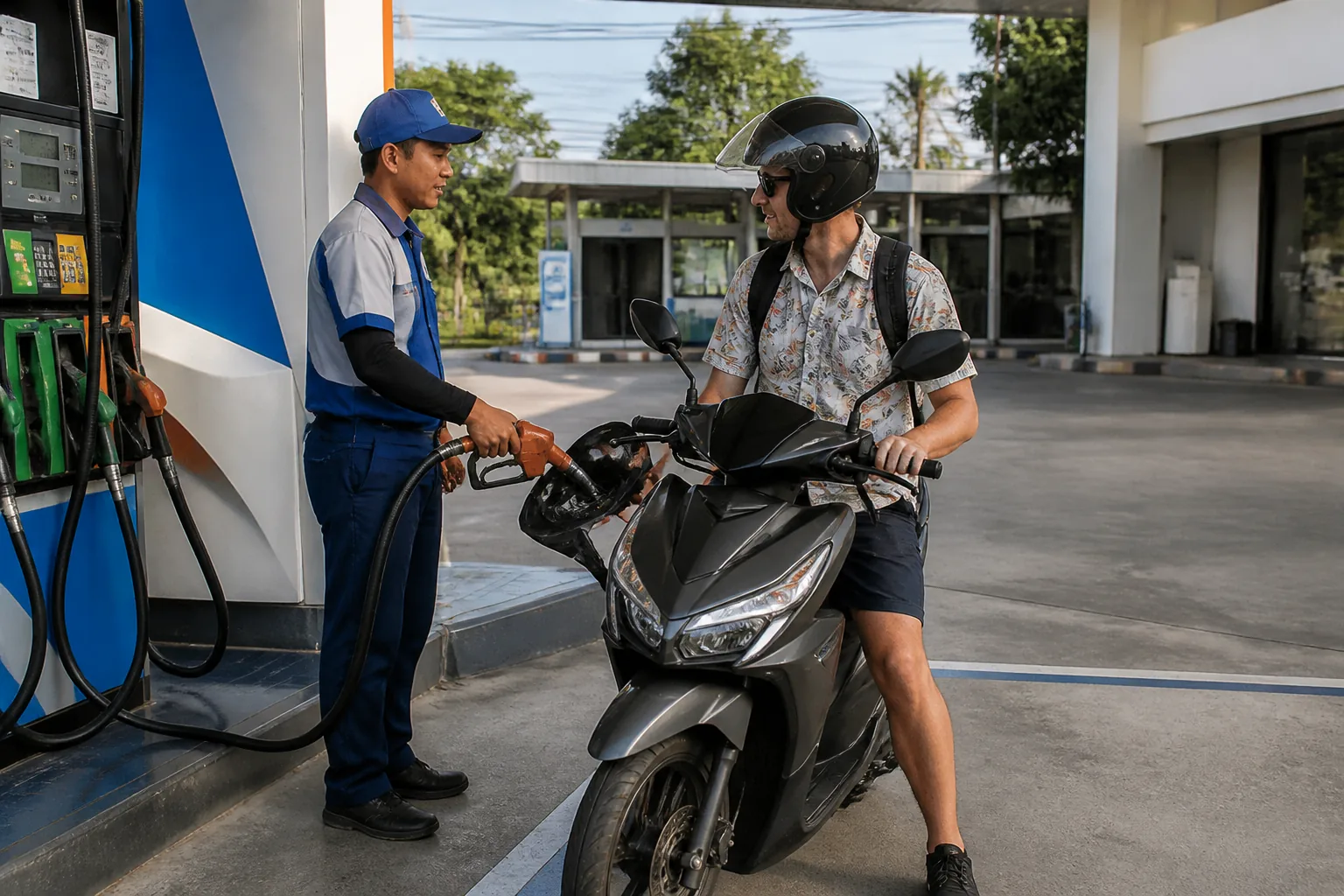
Your first stop at a petrol station in Thailand on a scooter can feel confusing: several pumps, Thai labels and an attendant walking towards you. The good news is that it’s one of the easiest parts of riding here.
At most stations an attendant fills the scooter for you. You tell them the fuel type and how much, then pay at the pump. This guide explains which fuel your rental scooter needs, what to say, how to pay and how to avoid running dry outside Chiang Mai.
How Does Filling Up Work at a Thai Petrol Station?
Most stations in Thailand are full service. You ride up to a pump, switch off the engine and get off the scooter. The attendant will usually open the fuel cap for you, or wait while you open it.
- Ride to a pump marked for petrol (benzine or gasohol), not diesel.
- Switch off the engine and step off the scooter.
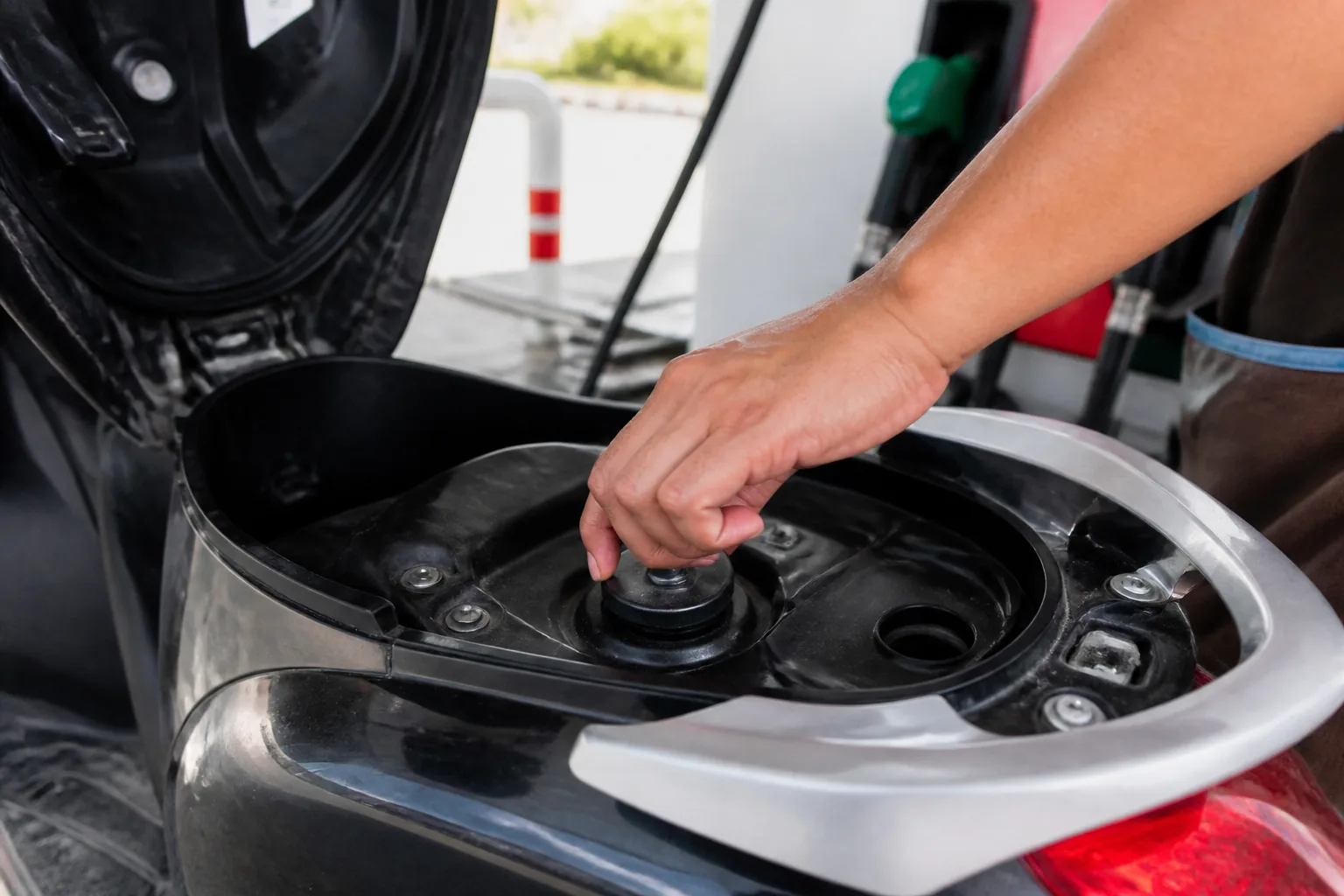
- Open the fuel cap. On most automatic scooters it’s under the seat or behind a small flap near your knees.
- Tell the attendant the fuel type and amount, for example “ninety-five, full tank”.
- Watch the pump reset to zero and check the fuel going in matches what you asked for.
- Pay the attendant and close the cap firmly before you ride off.
Large stations from brands like PTT, Bangchak, Shell and Caltex usually also have toilets, a convenience store and a café, which makes them good rest stops on longer rides.
Which Fuel Does a Rental Scooter Use?
Thai pumps can show several options, which is where most riders get confused. Your scooter needs petrol, never diesel.
| Pump label | What it is | For your rental scooter? |
|---|---|---|
| Gasohol 91 | Petrol with about 10% ethanol, 91 octane | Usually fine, ask us when you pick up |
| Gasohol 95 | Petrol with about 10% ethanol, 95 octane | The common, safe choice for most scooters |
| E20 / E85 | Petrol with more ethanol | Only if we confirm your scooter is compatible |
| Benzine 95 | Petrol without ethanol, premium | Fine, but usually costs more |
| Diesel (B7, B10, B20) | Diesel fuel | Never. It will stop the engine |
If you’re not sure, simply say “gasohol ninety-five”. When you collect your scooter, ask us which fuel we recommend for that model and we’ll confirm it.
What Should You Say to the Attendant?
Most attendants in Chiang Mai understand basic English and pump numbers. A few simple phrases make it even smoother:
- “Tem tang” means “full tank”. This is the easiest option for a scooter.
- You can also ask for a baht amount, for example “one hundred baht”, if you only want a top-up.
- Say the number of the fuel, such as “gao-ha” (95) or “gao-neung” (91).
- A smile and “khop khun krap / ka” (thank you) goes a long way.
How Do You Pay for Fuel in Thailand?
Cash is the simplest way to pay. Hand the money to the attendant at the pump and they’ll bring back your change. Small notes are useful, because a full scooter tank is a small amount.
Many large stations accept cards or Thai QR payments, but small and rural stations may only take cash. Keep some cash with you whenever you ride out of the city.
How Far Can You Ride on a Full Tank?
Automatic scooters have small tanks, usually around 4 to 7 litres depending on the model. A larger scooter such as the Yamaha NMAX holds a little more than a smaller Honda Click, as our Honda Click vs Yamaha NMAX comparison explains.
Your real range depends on your speed, the weight you carry and the terrain. Mountain climbs, riding two-up and heavy luggage all use more fuel than flat city riding.
When Should You Fill Up?
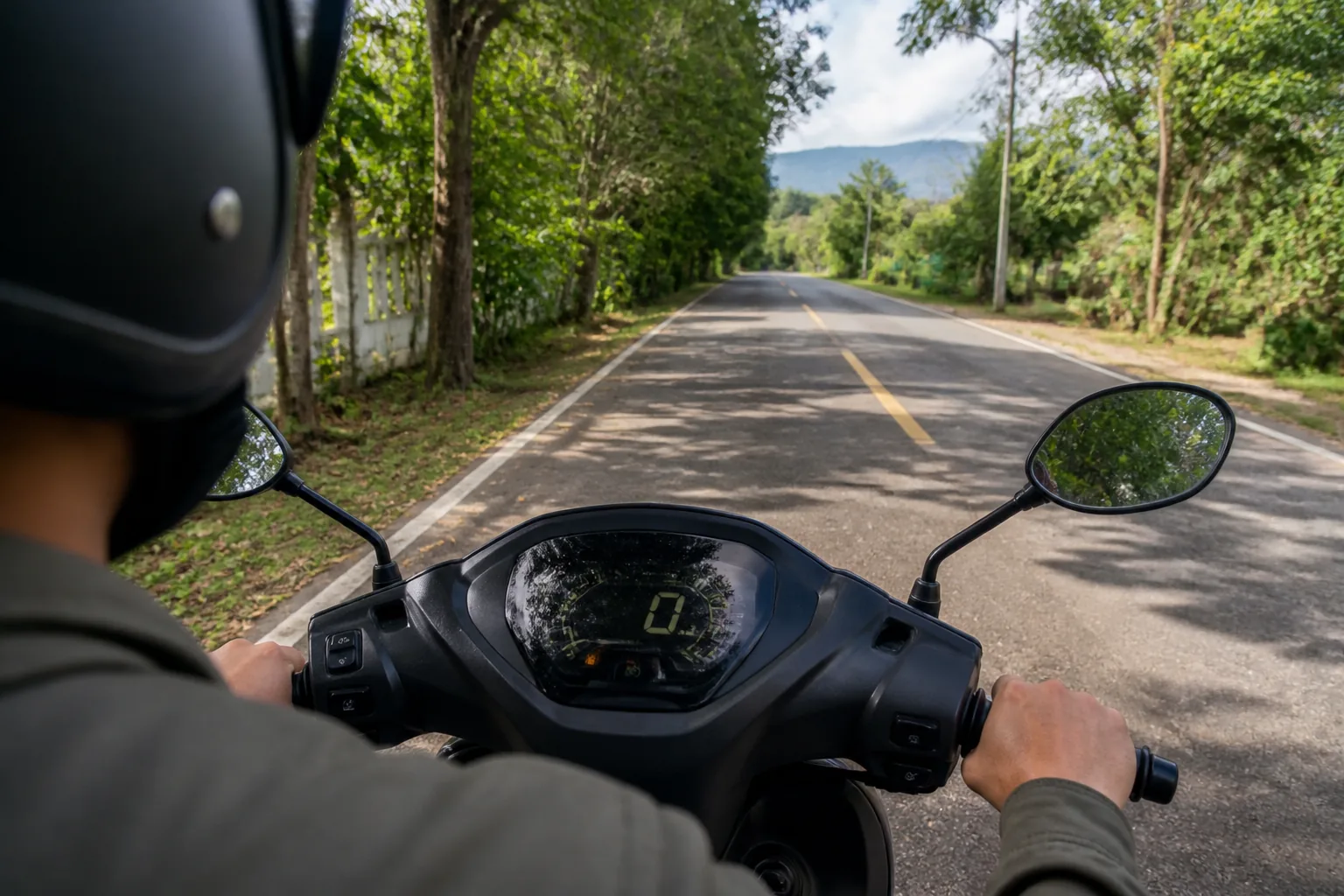
In Chiang Mai city, fuel stations are everywhere and many on main roads are open late or 24 hours. Outside the city, plan ahead:
- Fill up at half a tank before any mountain ride, such as the Samoeng Loop day trip.
- Top up in every town on multi-day trips like the Mae Hong Son Loop, where stations can be far apart.
- Don’t count on night opening in small villages, where stations often close in the evening.
- Check the gauge at every stop. Digital gauges can drop quickly on long climbs.
What Is Bottled Fuel at Roadside Stalls?
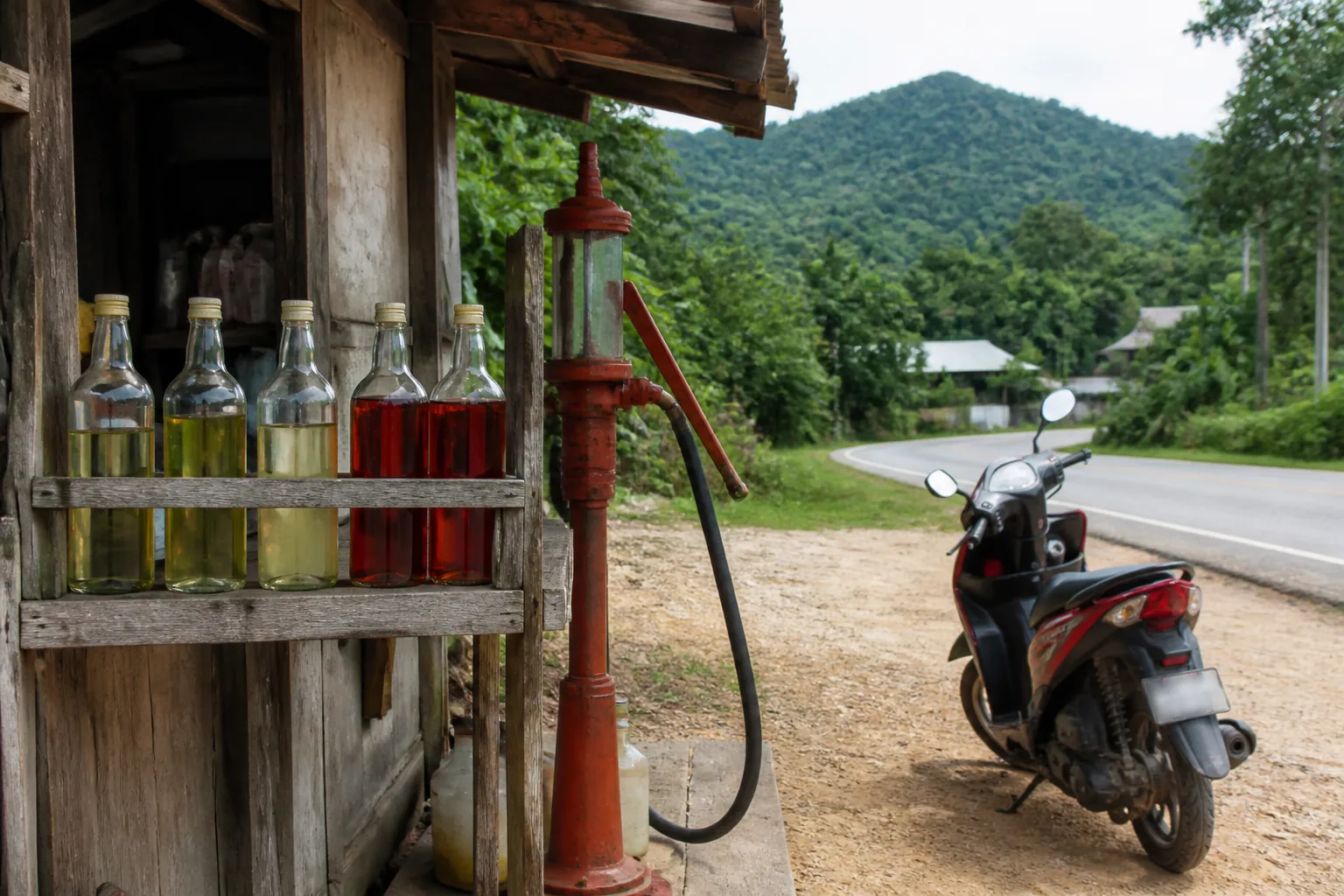
In villages you’ll see glass bottles of fuel on wooden racks, or small hand-crank pumps outside shops. This is roadside fuel, often sold for scooters by local families.
It’s handy in an emergency when there’s no station nearby. It usually costs more than a station, and you can’t always be sure of the fuel type, so use it to reach the next proper station rather than as your main fill-up.
What If You Run Out of Fuel or Use the Wrong One?
If your scooter runs dry, move safely off the road first. In towns, a roadside fuel stall or station is rarely far away, and locals are usually happy to point you to one.
If diesel goes into the tank by mistake, don’t start the engine. Contact us straight away and we’ll tell you what to do. Our guide on what to do after a scooter accident or flat tyre also covers how to get help on the road.
Fuel Checklist Before You Ride
- Ask which fuel your rental scooter takes when you collect it
- Note the fuel level at pickup and return
- Carry cash in small notes
- Fill up at half a tank before rides outside the city
- Save our contact details on your phone
Frequently Asked Questions
Do I fill up the scooter myself in Thailand?
Usually not. Most Thai petrol stations are full service, so an attendant fills the tank while you wait beside the scooter.
Which fuel should I put in a rental scooter in Thailand?
Gasohol 95 is the common choice for most automatic scooters. Never use diesel, and ask us before using E20 or E85.
Can I pay for fuel by card?
Many large stations accept cards or Thai QR payments, but small and rural stations often take cash only, so always carry some.
Is roadside bottled fuel safe to use?
It’s fine in an emergency to reach the next station. It usually costs more, and the fuel type isn’t always clear, so use stations when you can.
Are petrol stations open 24 hours in Chiang Mai?
Many stations on main roads in Chiang Mai are open late or 24 hours. In small villages, stations often close in the evening.
Ride With Confidence
Pick up your scooter at any of our three Haze Buds locations in Chiang Mai, with a helmet included. We’ll tell you the right fuel for your scooter and how full the tank is before you ride off. Choose a plan that suits your trip with our guide to daily, weekly and monthly scooter rental.
