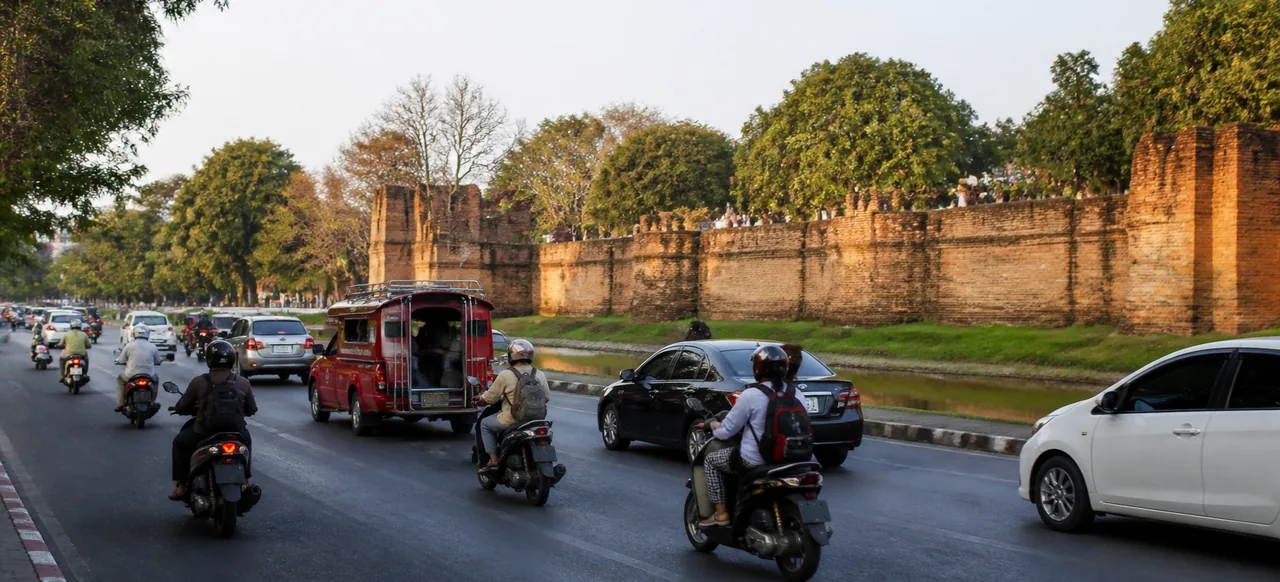
The first time you pull out onto the moat road on a rented scooter, Chiang Mai traffic can feel like a river with no banks. Cars, songthaews, tuk-tuks, food delivery riders and other tourists all seem to be flowing in different directions at once. Give it a day and you’ll notice the pattern: traffic here is slower and more forgiving than in Bangkok, and it runs on a few unwritten rules.
These are the 10 we share with every customer before they ride away. They won’t replace experience, but they’ll make your first few days much calmer.
- Keep Left, Always
Thailand drives on the left. That sounds obvious until you turn out of a quiet soi with no other traffic and instinctively drift to the right. Say it to yourself at every junction: left, left, left. Slower vehicles, including most scooters, stay close to the left edge, while cars and faster traffic use the right-hand side of the lane or the outer lane.
- Wear Your Helmet, Strapped
Helmets are compulsory for riders and passengers, and police checkpoints around the Old City do stop riders without them. More importantly, a helmet is the single best thing you can do for your own safety. Wear it every time, even for a two-minute trip to 7-Eleven, and fasten the chin strap. Every rental from us comes with helmets. For the full legal picture, including licences and checkpoints, read our guide to motorbike laws in Chiang Mai for tourists.
- Learn the Moat Roads Before You Ride Them
The Old City is surrounded by a square moat with roads on both sides, and both are one-way. The inner road runs anti-clockwise and the outer road runs clockwise. That means the side of the moat you’re on decides which way you can go. If you miss a turn, don’t try a quick U-turn across traffic; simply follow the loop round, or cross at the next bridge. Inside the walls, many smaller streets are one-way too, so watch for the round blue arrow signs and the no-entry signs at the start of each soi.
- Respect Red Lights (and Count Down With Them)
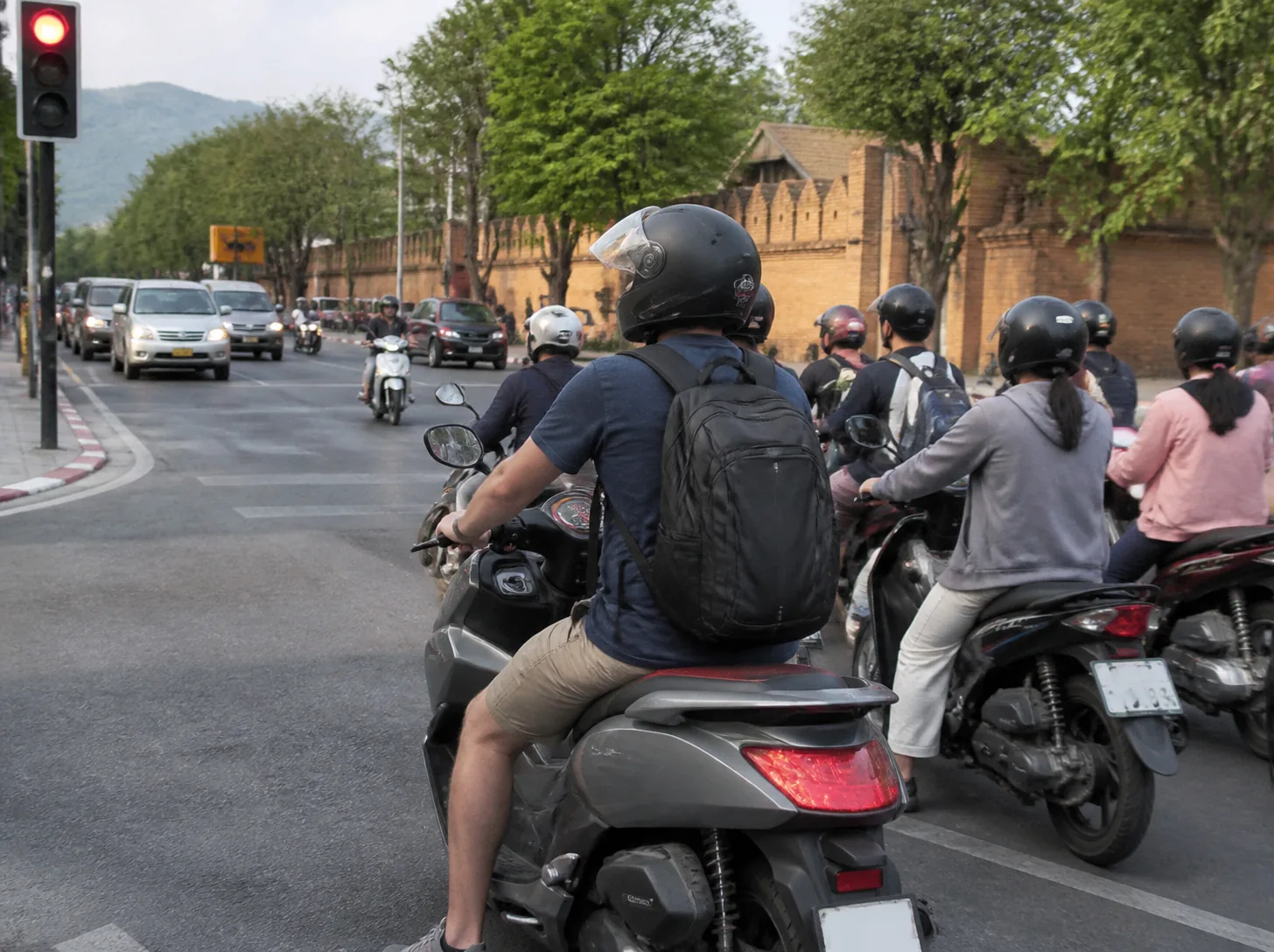
Many traffic lights in Chiang Mai have countdown timers. Use them. Don’t anticipate the green, because the last cars running the red are a common cause of accidents at big junctions such as those along the superhighway. Unless a sign specifically says left turns are allowed on red, wait for green. At busy lights scooters gather at the front of the queue; that’s normal, but stop behind the line and leave space for others.
- Expect Songthaews to Stop Anywhere
The red songthaew trucks are shared taxis, which means they pull over whenever a passenger waves or rings the bell. That can be in the middle of a lane, with no indicator. Never ride closely behind or squeeze along the left side of a songthaew; passengers climb out from the back and can step straight into your path. Hang back, check your mirror, then pass on the right when it’s clear.
- Filter Slowly, If at All
You’ll see local riders weaving between cars at lights. Filtering is common, but it’s where tourists often clip a mirror or get caught by an opening car door. If you do move up, go slowly, keep both hands covering the brakes and never filter between a vehicle and the kerb. In heavy traffic it’s perfectly fine to sit in the queue like a car.
- Make U-Turns at Proper Gaps
On big roads like the superhighway and Canal Road, you often can’t turn right directly. Instead you ride past your destination to a marked U-turn gap in the central divider. Slow down early, indicate right, move to the right-hand side of the lane and wait until both lanes of oncoming traffic are clear. Be patient here: U-turn points are one of the riskiest places for new riders.
- Use the Horn and Lights Politely
In Thailand a short beep isn’t rude. It simply means “I’m here”, for example on a blind bend or when passing. Long angry blasts, on the other hand, are frowned upon. Keep your headlight on day and night (most modern scooters do this automatically) and always indicate before changing lanes. Flashing headlights from an oncoming car usually means “I’m coming through”, not “go ahead”.
- Ride Gently in Rain and at Night
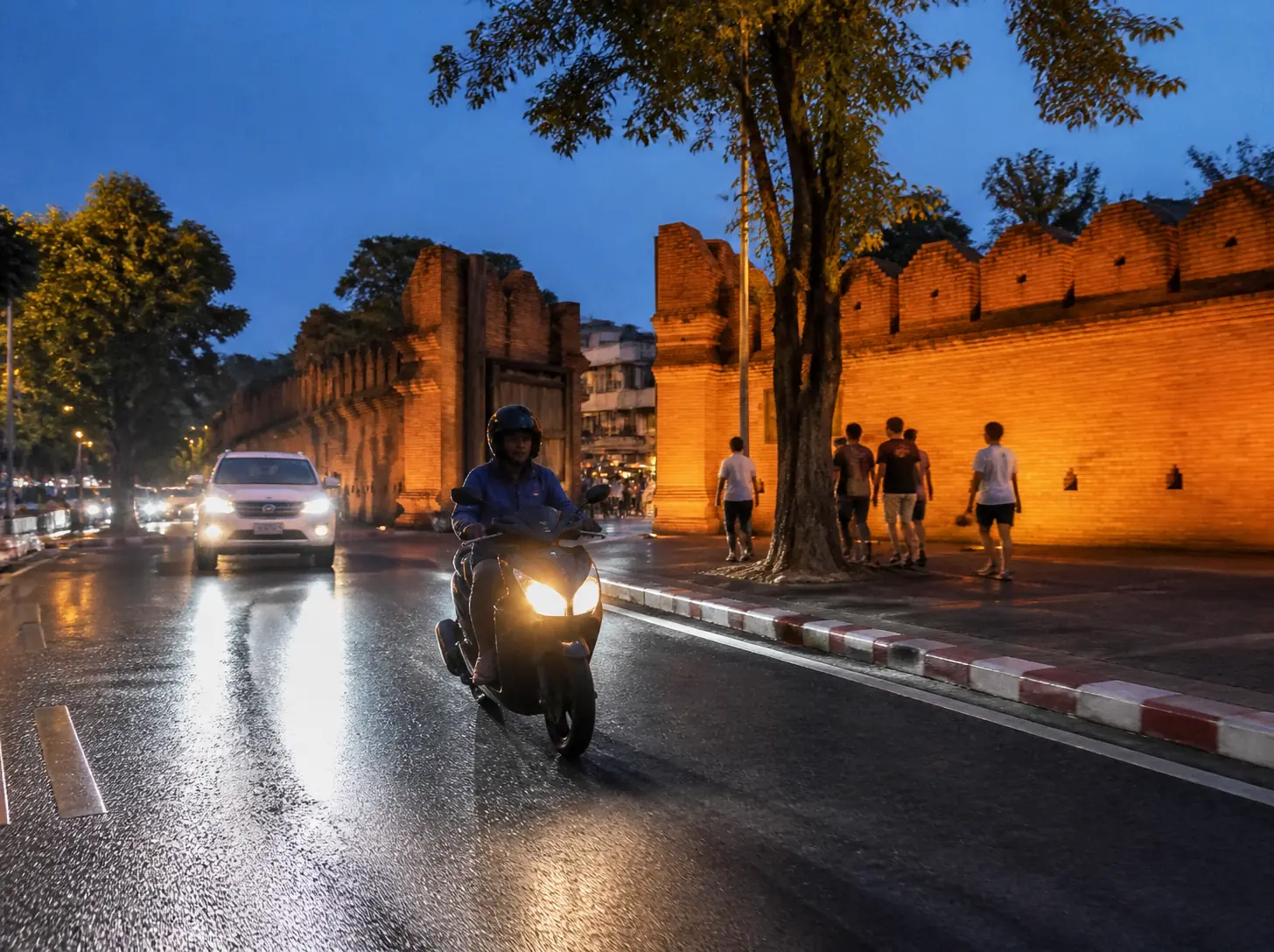
Afternoon downpours are common in the rainy season, and the first few minutes of rain are the most slippery, as oil lifts off the road. Slow down, brake gently and early, and avoid white road markings, metal drain covers and painted crossings, which become very slick. If a storm gets heavy, pull over under a shopfront and wait; most showers pass within half an hour. At night, watch out for unlit potholes, dogs crossing and riders without lights. Wear something light-coloured if you can.
- Never Drink and Ride
Thailand’s legal blood alcohol limit is 0.05%, and stricter limits apply to new licence holders. Police run regular checkpoints, especially on weekends and during festivals. Beyond the law, alcohol simply doesn’t mix with two wheels, unfamiliar roads and tropical rain. If you’re heading out for the evening, park the scooter and take a Grab or songthaew home.
A Few Extra Tips for Your First Day
- Start early. Weekend mornings before 9 AM are the quietest time to get used to your bike.
- Plan your route. Check your map before you set off, and use a phone mount rather than holding your phone.
- Fuel up. Most scooters take Gasohol 91 or 95. Petrol stations are everywhere, but fill up before heading into the mountains.
- Park considerately. Use marked scooter parking, and don’t block shop doors. Lock the steering and remove the key.
- Watch the edges. Sand, gravel and leaves collect at the side of the road, especially on bends.
Ready to Ride Further?
Once you’re comfortable in the city, Chiang Mai’s mountain roads are where riding gets really rewarding. Our Doi Suthep by scooter route guide is a great first climb, and the Samoeng Loop day trip is the classic next step.
If you haven’t picked up a bike yet, our guide to renting a motorbike in Chiang Mai in 2026 explains what to look for, and you can compare daily, weekly and monthly scooter rental options. Ride calmly, keep left and enjoy the city.

[…] Chiang Mai. Stay left, watch for cars turning across your path and keep your speed sensible. Our 10 rules for riding in Chiang Mai traffic are a good […]
[…] 10 rules for riding in Chiang Mai traffic are especially useful on festival […]
[…] into shops, and give buses and trucks plenty of room. If you’re new to riding here, our 10 rules for riding in Chiang Mai traffic are worth a quick read before you […]
[…] 107 is busy with trucks and buses. Stay in the left lane and keep a steady speed. Our 10 rules for riding in Chiang Mai traffic cover the habits that keep you safe on main roads like […]
[…] are flat with no hairpins. If you’re still getting used to riding on the left, read our 10 rules for riding in Chiang Mai traffic before you set […]
[…] You’ll ride busier city roads first, so stay in the left lane and watch for cars turning. Our 10 rules for riding in Chiang Mai traffic are worth a read before you set […]
[…] stay in the left lane, leave plenty of space and watch for vehicles turning into side streets. Our 10 rules for riding in Chiang Mai traffic cover exactly the situations you’ll meet […]
[…] heavy city traffic, so stay in the left lane, keep a steady speed and let faster vehicles pass. Our 10 rules for riding in Chiang Mai traffic cover lane position, U-turns and other situations you’ll meet on this […]
[…] has busy city traffic, so keep left, ride at a steady speed and let faster vehicles pass. Our 10 rules for riding in Chiang Mai traffic cover lane position, junctions and […]