

Quick answer: Wiang Kum Kam is about 5 km south of Chiang Mai’s Old City, roughly 20 to 30 minutes by scooter on flat city and suburban roads. It’s one of the easiest rides from town and suits new riders.
The ancient brick temple ruins are spread over a wide area of villages and quiet lanes, so a scooter is the ideal way to get between them. Allow two to three hours, and go in the morning or late afternoon when it’s cooler.
Last updated: 18 November 2026
Wiang Kum Kam is the ancient city that King Mangrai built before he founded Chiang Mai in the late 13th century. Repeated flooding from the Ping River buried it under silt, and it was largely forgotten for centuries until excavations brought the ruins back to light in the 1980s. Today you can explore dozens of red-brick temple sites among villages, gardens and big shady trees, all a short ride from the Old City.
Where Is Wiang Kum Kam?
Wiang Kum Kam lies on the southern edge of Chiang Mai, close to the Ping River, in Saraphi district. Set your map to the Wiang Kum Kam Information Center or Wat Chedi Liam, and it will lead you there on main roads, then onto local lanes.
| Ride facts | Details |
|---|---|
| Distance from Tha Phae Gate | Roughly 6 to 8 km by road |
| Riding time | About 20 to 30 minutes each way |
| Road type | City roads, then quiet suburban lanes |
| Difficulty | Easy, flat and short |
| Entry | Most ruins are free to visit |
| Time on site | About 2 to 3 hours |
| Best time | Morning or late afternoon |
What Is the Best Route by Scooter?
The simplest way is to head south from the Old City towards the Ping River, then follow the main road south towards Saraphi and turn off towards Wiang Kum Kam when your map tells you. The first part has busy city traffic, so keep left, ride at a steady speed and take care at junctions and U-turns. Our 10 rules for riding in Chiang Mai traffic cover the basics.
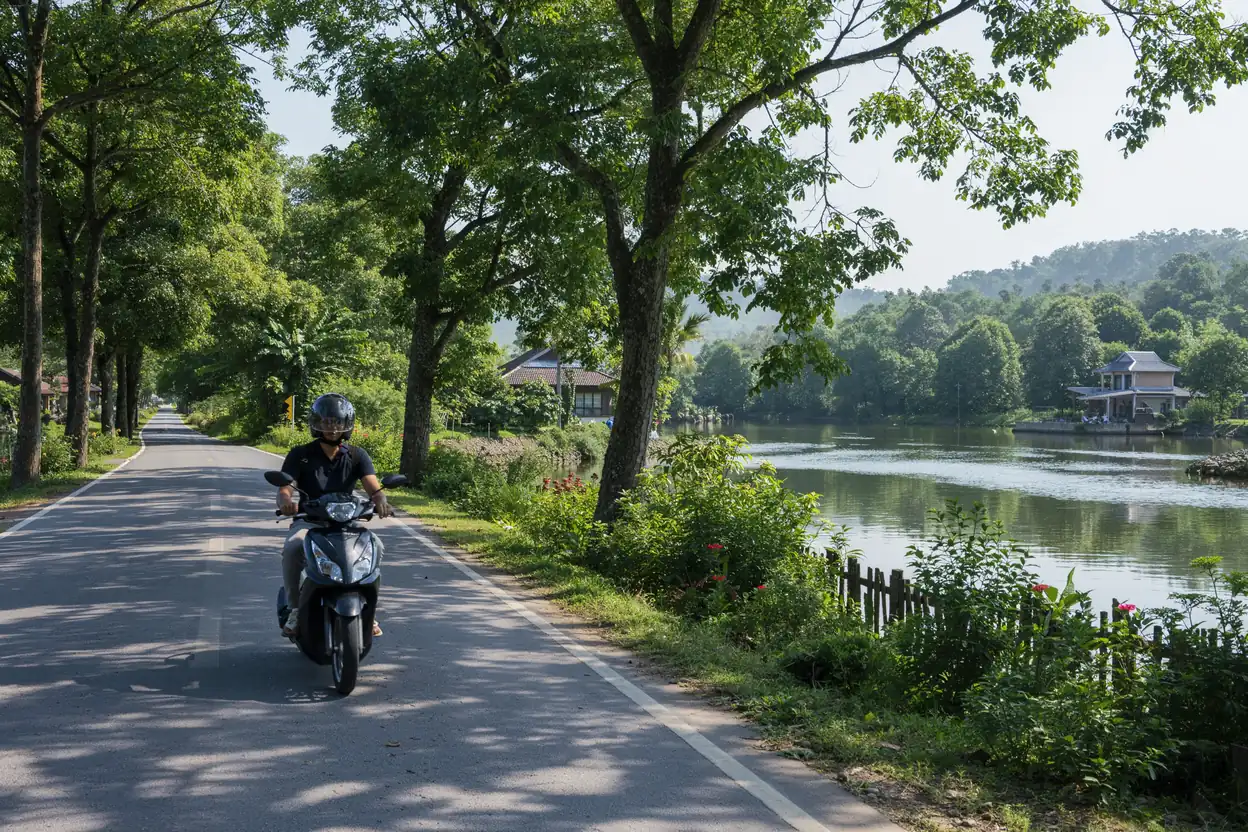
Once you leave the main road, the lanes get much quieter, with houses, gardens and glimpses of the river. Slow down in the villages, watch for dogs, cyclists and children, and give way to cars coming out of side roads.
Which Temples Should You See at Wiang Kum Kam?
The ruins are spread out, so pick a few highlights rather than trying to see everything:
- Wat Chedi Liam: an active temple with a tall, tiered brick chedi, one of the best-known landmarks of the ancient city.
- Wat Chang Kham: an active temple near the information centre, linked in local tradition to King Mangrai.
- Wat Pu Pia: a small, well-preserved brick temple with a bell-shaped chedi.
- Wat E-Kang: a peaceful ruin among large trees, good for photos.
- Wiang Kum Kam Information Center: a small exhibition on the history of the city, a good first stop to get your bearings.
Remember that active temples are places of worship. Dress modestly, with shoulders and knees covered, take your shoes off where asked and keep your voice down.
Where Do You Park at Wiang Kum Kam?
There’s parking near the information centre and at the main temples, with space for scooters. Park on firm, level ground, lock the steering and keep your helmet with you or lock it under the seat. At the smaller ruins, park at the side of the lane where you won’t block gates or driveways.
Can You Take a Horse Cart or Tram Tour Instead?
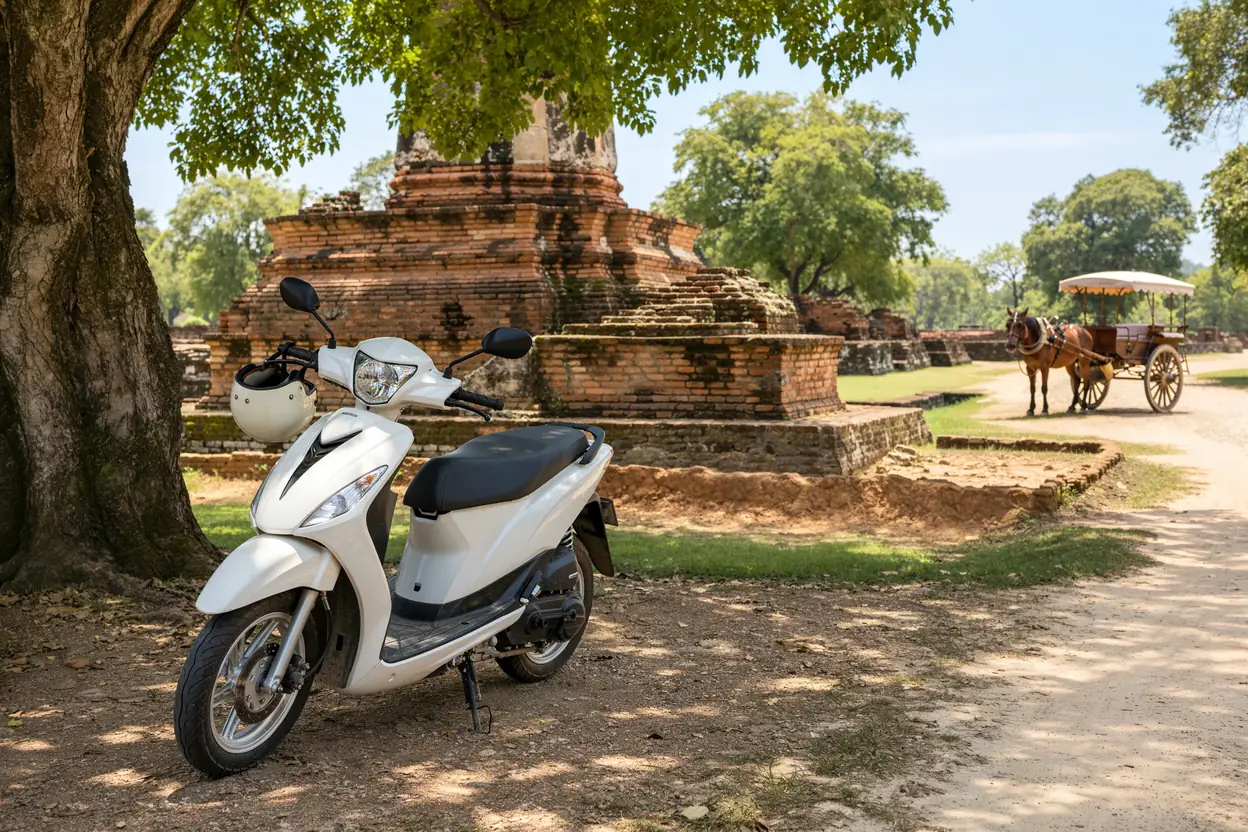
Yes. Horse-drawn carts and small open trams run tours between the main ruins from near the information centre, for a fee. They’re a relaxing option if you’d like a guide-style loop, and you can still ride your scooter there and back. Many visitors do a short cart tour first, then ride on their own to the sites they liked best.
What Should You Bring?
- Your licence and the rental papers, in case of a police checkpoint. Our guide to motorbike laws in Chiang Mai explains what you need.
- Clothes that cover your shoulders and knees for the active temples.
- Sunscreen, a hat and water, as there’s little shade between some sites.
- Some cash for drinks, snacks and a cart tour if you’d like one.
- A phone with offline maps, as the lanes between ruins can be confusing.
How Can You Make a Day of It?
Wiang Kum Kam combines well with another short ride. You could head east afterwards to the craft villages along the road to San Kamphaeng; our guide to Bo Sang Umbrella Village by scooter has the route. If you’d like a temple with a view instead, Wat Doi Kham by scooter is another easy half-day ride south-west of the city.
Key Takeaways
- Wiang Kum Kam is about 5 km south of the Old City, 20 to 30 minutes by scooter.
- The route is flat and easy, with busy city traffic at the start and quiet lanes at the end.
- Most ruins are free; horse cart and tram tours are available for a fee.
- Dress modestly for the active temples and carry your licence and rental papers.
- Go in the morning or late afternoon, and allow two to three hours.
Frequently Asked Questions
How far is Wiang Kum Kam from Chiang Mai?
About 5 km south of the Old City, or roughly 6 to 8 km by road from Tha Phae Gate, which takes about 20 to 30 minutes by scooter.
Is the ride to Wiang Kum Kam suitable for beginners?
Yes. The road is flat and short. The busiest part is leaving the city, so ride steadily and take care at junctions.
Is there an entry fee at Wiang Kum Kam?
Most of the ruins are free to visit. Horse cart and tram tours, and some exhibitions, charge a small fee.
How long do you need at Wiang Kum Kam?
About two to three hours is enough to see the main temples at a relaxed pace, including the ride there and back.
What should I wear to visit Wiang Kum Kam?
Light clothes that cover your shoulders and knees, as some sites are active temples, plus a helmet and closed shoes for riding.
Rent a Scooter for Your Trip
Ready to explore Chiang Mai’s ancient city? Motorbike Rent Chiang Mai has well-maintained automatic scooters with free helmets, and you can rent by the day, week or month. Check our daily, weekly and monthly scooter rental prices and pick up your bike in town.
